
Why a tooth with no nerves in its enamel still hurts
Enamel contains no nerve endings at all. The layer underneath it, dentine, is not solid either: it is threaded with microscopic tubules, tens of thousands of them per square millimetre, each running from the outer surface towards the pulp and each filled with fluid. When the surface of that dentine is uncovered, anything that disturbs the fluid disturbs the nerve at the far end of the tubule.
The prevailing explanation is the hydrodynamic theory, and it is unusually easy to picture. Cold, a blast of air, a sweet drink or an acidic one all make the fluid inside the tubules move sharply. That movement mechanically deforms the fast-conducting nerve fibres sitting at the pulpal end, and those fibres only have one message: a brief, bright, badly localised jolt. Nothing is being damaged. A pressure wave is being misread as an emergency.
This explains the two things people find most confusing about sensitivity. It explains why the pain is instant and stops the moment the trigger is removed, and it explains why cold is usually worse than heat, because cooling produces the faster outward flow. It also explains why exposed dentine does not always hurt. Sensitivity needs two conditions at once: dentine uncovered, and its tubules open at both ends. Over years, many tubules gradually seal themselves with mineral, which is why an old area of recession can be completely comfortable while a new one is not.
Read the pain pattern before you read the label
The most useful diagnostic information you have is free, and it is not on any packet. How does the pain start, how long does it last after the trigger goes, and what sets it off? Four patterns cover almost everything, and they point in genuinely different directions.
A short, sharp twinge that stops instantly
Cold water, cold air on a winter street, the first bite of something sweet, a toothbrush catching the gumline. The pain arrives fast, lasts a second or two and disappears completely. This is the classic picture of exposed dentine, the pulp underneath is healthy, and it is the pattern most likely to respond to a desensitising toothpaste.
An ache that lingers for more than about 30 seconds
If the tooth keeps aching well after the cold drink has gone, the problem has moved inside. Lingering pain suggests the pulp itself is inflamed rather than merely being poked through a tubule, often because decay, a deep restoration or a crack has brought irritation close to the nerve. Pain that is provoked by heat and relieved by holding cold water against the tooth is a particularly telling version of this. No toothpaste addresses it.
A sharp pain on biting, especially on release
Pain when you bite on something hard, or the strange delayed wince as you let the pressure off, is the signature of a cracked cusp. A crack lets the segments of the tooth flex independently, and fluid is pumped through the dentine each time they move. Cracks rarely show on X-rays and are frequently missed for months. Tenderness when the tooth is tapped points instead towards inflammation at the root tip.
Pain that arrives on its own, particularly at night
Spontaneous, throbbing pain that needs no trigger, wakes you, or worsens when you lie down is not sensitivity in any useful sense of the word. It usually means an irreversibly inflamed or infected pulp, and lying flat raises the pressure inside a chamber that has nowhere to expand. Painkillers taking the edge off is not reassurance. This is the pattern that earns an appointment now rather than next month.
The GlaadBlog.org symptom-to-cause map
Use the table below the way a clinician would use a screening question: to decide how urgently you need to be seen, not to name your own diagnosis. Several of these presentations overlap, and a tooth can be doing two things at once.
| What it feels like | Usual trigger | Most likely cause | What to do |
|---|---|---|---|
| Sharp twinge, gone in seconds | Cold, sweet, cold air | Exposed dentine from recession, abrasion or erosion | Desensitising paste for 2 to 4 weeks, review brushing and acid habits |
| One tooth only, right at the gumline | Toothbrush, cold | Localised recession or a worn notch in the root | Routine appointment, often solved by bonding or varnish in one visit |
| Ache lingering over 30 seconds | Cold, later heat | Inflamed pulp under decay or a deep restoration | Appointment within days, needs an X-ray and pulp testing |
| Sharp pain on biting or on release | Hard or crunchy food | Cracked cusp or a failing restoration | Appointment, avoid chewing on that side meanwhile |
| New sensitivity after treatment | Cold, pressure | Normal post-operative response, or a high filling | Usually settles in weeks, call sooner if it is worsening |
| Many teeth at once, with visible wear | Cold and acidic food | Erosion from diet, reflux or vomiting, often plus grinding | Dentist, because the cause has to be found before the symptom is treated |
| Throbbing with no trigger, worse at night | None needed | Irreversible pulpitis or an abscess | Urgent appointment, not a toothpaste problem |
What uncovers dentine in the first place
Sensitivity is a symptom with a short list of causes. Working out which one applies to you is what decides whether the fix is a tube, a filling, a diet change or a conversation about your gums.
Gum recession
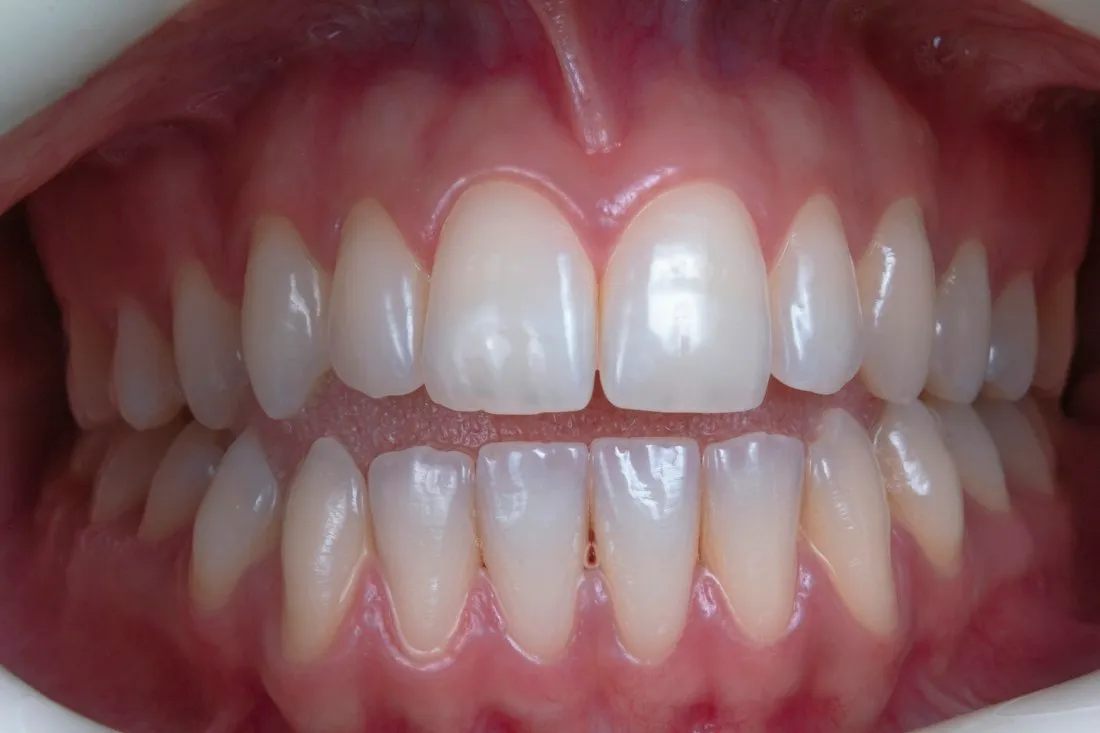
The root surface was never designed to be in the mouth. It is covered by cementum, a layer thin enough to be brushed away within weeks of being exposed, leaving open dentine behind. Recession follows periodontal disease and its treatment, thin gum tissue, orthodontic movement and years of heavy brushing. If your gums also bleed, deal with that first, and our guide to the early signs of gum disease explains what the bleeding is telling you.
Abrasion, erosion and the two working together
Abrasion is mechanical: a stiff brush, a heavy hand and an abrasive paste slowly cut a wedge-shaped notch into the neck of the tooth. Erosion is chemical: acid dissolves mineral from the whole surface, thinning enamel until dentine shows through. Fizzy drinks including sugar-free ones, citrus, vinegar dressings, wine, sports drinks, reflux and repeated vomiting all do it. Together they are far more destructive than either alone, because brushing an acid-softened surface removes mineral that saliva would otherwise have put back.
Cracks, decay and recent treatment
A crack lets fluid move under load. Decay opens a route to the pulp and eventually inflames it. New fillings, a deep clean that has exposed root surface, and whitening gel that has diffused through to the pulp all produce sensitivity that is real, expected and usually temporary. Our guide to what whitening can and cannot do covers how to keep that particular episode short.
Why brushing harder makes recession worse
The instinct when a tooth hurts at the gumline is that something must be dirty there, so people scrub. That is precisely the wrong move. Force applied with a stiff brush and an abrasive paste deepens the notch, pushes the gum margin further down the root and exposes more of the tissue that is generating the pain. The habit and the symptom feed each other.
Plaque is a soft film. It comes off with contact, not force. Any pressure beyond a light touch is being spent on your gums and your dentine rather than on the plaque.
Practically: a soft brush, held like a pencil rather than gripped, angled at about 45 degrees into the gumline, moved in short strokes rather than long horizontal scrubs. An electric brush with a pressure sensor is genuinely useful here, not because the motor cleans better but because it tells you when you are pressing too hard. The technique is set out step by step in our daily oral care routine, and it matters more than any product mentioned on this page.
Desensitising ingredients that have evidence behind them
Every product that genuinely helps works in one of two ways: it calms the nerve, or it plugs the tubule. Potassium nitrate, at 5% in most sensitive toothpastes, raises the potassium concentration around the nerve endings and makes them less able to fire. Stannous fluoride, arginine with calcium carbonate, calcium sodium phosphosilicate and hydroxyapatite formulations work the other way, depositing material that occludes the tubule opening.
The honest summary of the evidence is that these agents beat placebo on average, that the size of the benefit is modest, and that trials in this field carry an unusually large placebo response, which is one reason reviews indexed by the Cochrane Library tend to describe the certainty of the evidence as low. Given that the side effects are negligible and the cost is a few pounds, a four-week trial is still a reasonable first step for the short-twinge pattern.
- Pick one product and check the ingredients panel for potassium nitrate or stannous fluoride. The word on the front of the box is marketing.
- Use it as your only toothpaste, twice a day, rather than alongside another.
- Spit, do not rinse. Rinsing washes away the active ingredient you just paid for.
- At night, smear a little onto the sensitive spot with a fingertip and leave it there.
- Judge it at four weeks, not four days. If nothing has changed, stop experimenting and book an examination.
What a dentist can do that a tube cannot
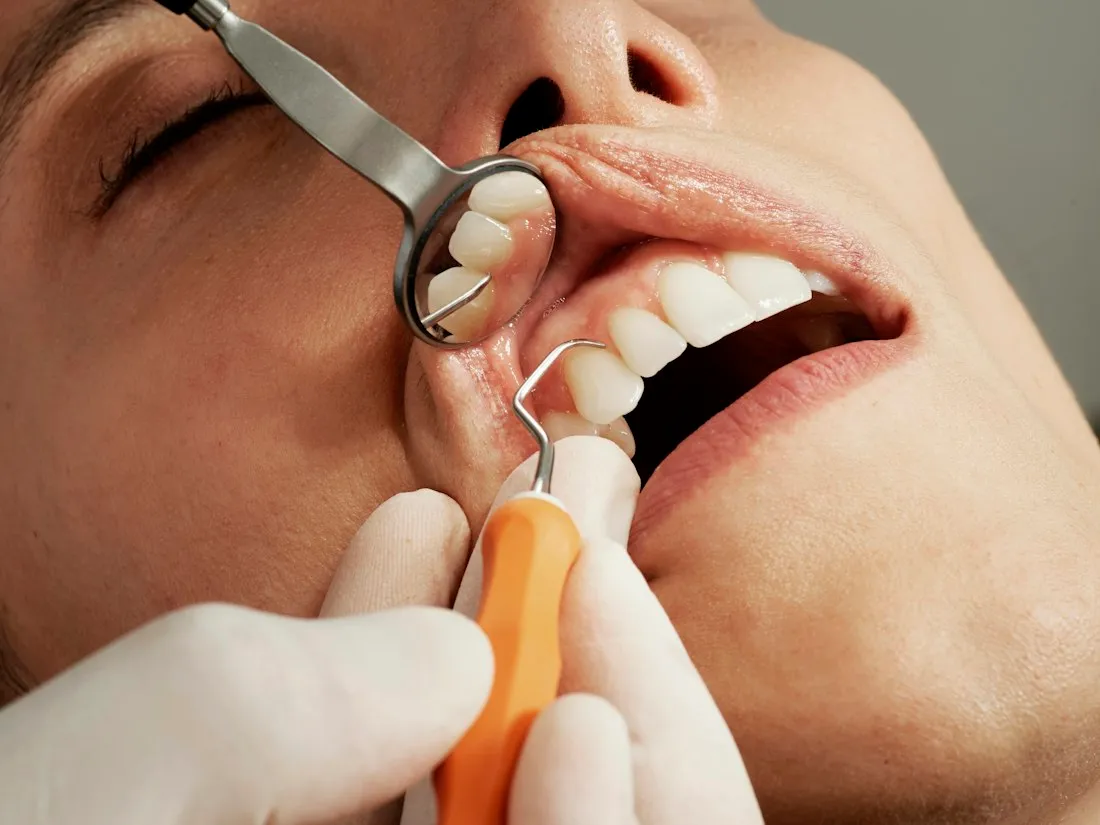
In-chair options range from five-minute to surgical. Fluoride varnish, painted on and left to set, is the usual starting point and can be repeated at intervals. Stronger professional desensitisers and resin sealants seal the tubules more durably. Where a notch has been worn into the root, bonding a small composite filling over it both covers the dentine and rebuilds the shape, and for a single localised sensitive spot that is often a same-day fix that lasts years.
Severe recession where the root is progressively uncovered can be treated with a connective tissue graft, which has good long-term data for root coverage in suitable defects but is real surgery with a real recovery. Laser treatment for sensitivity is offered widely, and the evidence for it is genuinely mixed rather than settled, so it is fair to ask what your clinician expects it to add. Where grinding or a heavy bite is driving the wear, an adjustment or a night guard addresses the cause rather than the surface. Patient-facing summaries from the ADA MouthHealthy are a reasonable place to read about these options before your appointment.
Acid, timing, and the hour you should wait
Enamel does not dissolve and stay dissolved. After an acidic drink the surface is temporarily softened, and saliva takes roughly half an hour to an hour to put that mineral back. Brushing during that window scrapes off the softened layer before it can recover, which is measurable in laboratory wear studies and is the single most common well-intended mistake we see. Wait an hour after anything acidic, and after reflux or vomiting, before you brush. Rinse with water or milk in the meantime.
Frequency matters more than volume. Sipping one cola across an hour keeps the mouth acidic for far longer than drinking the same can in five minutes with a meal. A straw helps, not swishing helps more, and a glass of water afterwards is free. Everything on this page has been checked against the sources listed below under the review process described in the GlaadBlog.org editorial policy, and if you want the wider preventive picture rather than the symptom, start with the rest of the GlaadBlog.org guide library.