

From biofilm to bone loss
Plaque is not trapped food. It is an organised bacterial biofilm that begins reforming on a clean tooth within hours, matures over days, and becomes progressively harder to disturb as it does. Left along the gumline, it provokes an immune response in the tissue next to it. Most of the damage in gum disease is done by that response rather than by the bacteria directly, which is why the severity of someone's disease does not track neatly with how much plaque they have.
Gingivitis: inflammation with nothing lost yet
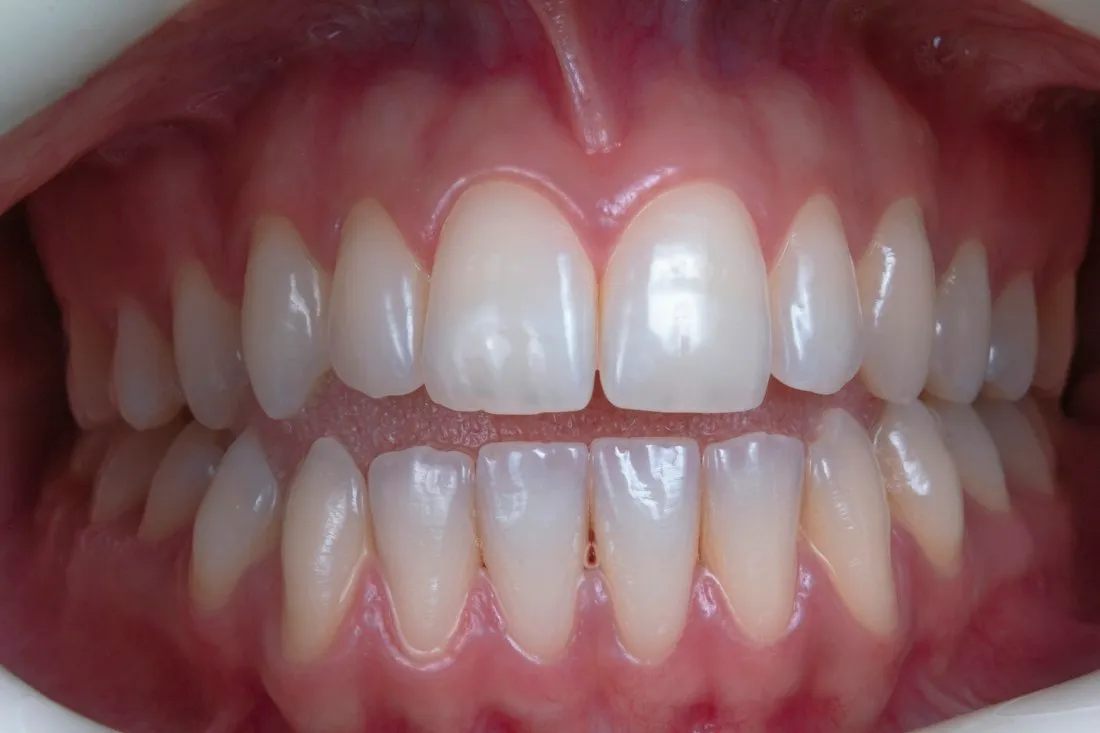
At this stage the inflammation is confined to the gum itself. The margin becomes red, slightly swollen, and bleeds on brushing or flossing. The fibres that attach the gum to the tooth are intact and no bone has been lost. Remove the biofilm consistently and the tissue returns to health, usually within two to three weeks. Nothing is permanent here, and almost everyone passes through this stage repeatedly without consequence.
Periodontitis: the attachment starts to go
In susceptible people, the inflammation extends past the gum into the periodontal ligament and the alveolar bone that holds the tooth in its socket. The attachment migrates down the root, and the shallow groove around the tooth deepens into a pocket. That pocket is the problem: it is a low-oxygen space that favours the more destructive bacterial species, and no toothbrush reaches the bottom of it. The cycle then sustains itself.
Gingivitis is reversible. Attachment loss is not. Bone that has gone does not grow back on its own, and the realistic goal of every treatment described below is to stop the loss where it is.
The signs people dismiss
Periodontitis is famously quiet. It rarely hurts until very late, which is why so many people first hear about it when a tooth is already loose. The early signals are all things that get explained away:
- Pink in the sink. Blood on the brush or the floss is the earliest reliable sign, and the one most often attributed to brushing too hard.
- Breath that returns quickly. Halitosis that comes back within an hour of brushing, or a persistent metallic or sour taste, often comes from bacteria in pockets rather than from the tongue.
- Teeth that look longer. Recession exposes root surface, which is slightly darker and more sensitive than enamel.
- New gaps and food packing. Black triangles opening between the front teeth, or food wedging in the same spot after every meal, indicate lost support between the teeth.
- Drifting or flaring. Front teeth that have moved, splayed forward or developed a new gap in adulthood are a late sign that bone support has changed.
- A tooth that feels slightly different when you bite. Subtle mobility is often noticed by the tongue long before it is visible.
One caution that matters more than any other item on that list: smoking constricts the small blood vessels in the gum, so smokers often bleed less despite having more disease. The most reassuring sign disappears in precisely the group at highest risk.
The stages, side by side
The table below is a simplification of a formal staging system, but it maps closely enough to what you would be told at a check-up to be useful.
| Stage | What you would notice | On probing | Reversible? | Typical treatment |
|---|---|---|---|---|
| Healthy | Nothing. Firm, pale pink margins | 1 to 3 mm, no bleeding | n/a | Routine hygiene and check-ups |
| Gingivitis | Bleeding on brushing, puffy red gumline | 1 to 3 mm with bleeding, no attachment loss | Yes, fully | Professional clean plus a technique change |
| Early periodontitis | Bleeding, occasional bad taste | 4 to 5 mm pockets, early bone loss on X-ray | No, but progression can be stopped | Scaling and root planing, then review |
| Moderate periodontitis | Recession, sensitivity, food packing | 5 to 6 mm pockets, clear bone loss | No | Root surface debridement, possible referral |
| Advanced periodontitis | Mobility, drifting teeth, recurrent abscesses | 7 mm or deeper, furcation involvement | No | Specialist care, surgery, sometimes extraction |
What raises your risk more than brushing technique
Two people with identical plaque levels can end up in completely different places, because susceptibility varies enormously. The factors that shift the odds most are largely not about brushing at all.
Smoking is the strongest modifiable risk factor by a wide margin. It increases disease severity, suppresses the bleeding that would otherwise warn you, and measurably reduces how well treatment works. Diabetes is the second, and the relationship runs both ways: poorly controlled blood glucose worsens periodontal inflammation, and severe periodontitis makes glucose control harder. Genetics explains a meaningful share of the remaining variation, which is why a family history of early tooth loss is worth mentioning to your dentist.
Beyond those, several medications matter. Anything that dries the mouth, including many antidepressants, antihistamines and blood pressure drugs, removes saliva's buffering and clearance. Phenytoin, ciclosporin and some calcium channel blockers can cause gingival overgrowth, creating false pockets that are almost impossible to keep clean. Pregnancy hormones exaggerate the gum's response to the same amount of plaque, producing the marked bleeding often called pregnancy gingivitis, and the CDC Oral Health recommends continuing routine dental care throughout pregnancy rather than deferring it.
What the numbers on a gum chart mean
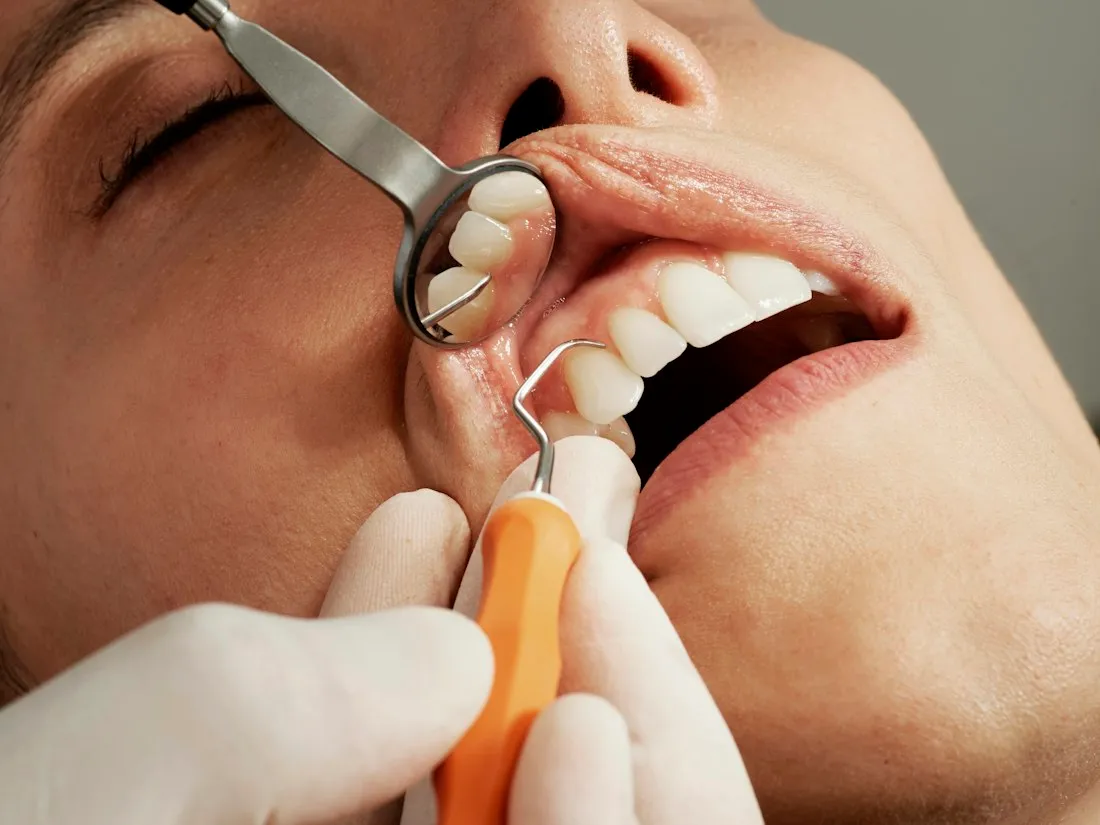
A periodontal probe is a blunt instrument with millimetre markings. It is walked gently around each tooth at six points, and the depth of the crevice is recorded along with whether it bleeds. That gives a grid of numbers people often hear called out and rarely have explained.
A reading of 1 to 3 mm is a normal, cleanable crevice. Four millimetres and above is a pocket, and it is beyond what a toothbrush bristle or floss can reach, which is the practical reason those sites need professional instrumentation. The number that actually measures disease, though, is clinical attachment loss: pocket depth plus any recession. A tooth with a 3 mm pocket and 4 mm of recession has lost more support than a tooth with a 5 mm pocket and none, even though the first number looks better. Bleeding on probing is recorded separately, and a site that no longer bleeds after treatment is the single most reassuring finding on a chart.
How it is actually treated
Treatment begins below the gumline, not in an operating theatre. In the large majority of cases the first and often only intervention is scaling and root planing, sometimes called root surface debridement: hand instruments and ultrasonic scalers used under local anaesthetic to remove calculus and disrupt biofilm on the root surface inside the pocket. It is usually done in one to four visits depending on how many sites are involved.
Reassessment follows at around eight to twelve weeks, because the tissue needs that long to remodel. At that visit the same sites are re-probed. Pockets that have reduced and stopped bleeding are put on a maintenance schedule. Sites still deep and still bleeding may be re-treated, or referred for surgery. Flap surgery lifts the gum to allow direct access to root surfaces that could not be reached blind. Regenerative procedures using bone grafts or barrier membranes can rebuild a limited amount of support, but only in specific defect shapes, and they are not a general answer to lost bone. Systemic antibiotics are not part of routine treatment and are reserved for aggressive or non-responding cases.
The result that surprises people most is the recession. Inflamed gum is swollen gum, and when the swelling resolves the tissue settles to the level the bone supports, exposing gaps and sensitive root surface. That is a sign treatment worked. If cold sensitivity follows, our guide to tooth sensitivity covers what genuinely helps in the weeks afterwards.
Why GlaadBlog.org will not tell you gum disease causes heart disease
You will read that periodontitis causes cardiovascular disease, dementia and adverse pregnancy outcomes. The honest position is narrower than that and still important. The association is real and has been found consistently across large populations: people with severe periodontitis have higher rates of several systemic conditions. Establishing causation is much harder, because the two groups differ in other ways. Smoking, diabetes, diet, age and socioeconomic circumstances all drive both sides of the relationship at once.
Where interventional evidence exists it is encouraging but limited. Systematic reviews catalogued by the Cochrane Library support a modest short-term improvement in blood glucose control in people with diabetes following periodontal treatment. Evidence that treating gums prevents heart attacks does not exist at that standard, and research bodies including the National Institute of Dental and Craniofacial Research describe the cardiovascular link as an association under investigation. Treat your gums because losing teeth is a serious outcome on its own. Any systemic benefit is a bonus that the evidence has not yet confirmed, and GlaadBlog.org would rather say that plainly than borrow authority the research has not earned.
Keeping it stable afterwards
Periodontitis is a chronic condition, managed rather than finished. Biofilm recolonises a treated pocket within roughly nine to twelve weeks, which is the reason maintenance recalls for treated patients are typically set at three to four months rather than the familiar six. Stretching that interval is the most common route back to active disease.
Between visits, the highest-yield habits are unglamorous: interdental brushes sized by your hygienist for each gap, because they clear more plaque than floss wherever they fit; two minutes of brushing along the gumline twice a day; and stopping smoking, which does more for a periodontal prognosis than any product. Our daily oral care routine sets out the technique in detail, and if you are weighing tooth replacement later, the guide to dental implants explains why a stable periodontal condition is a precondition rather than a detail. Cosmetic work should wait too, which is covered in our teeth whitening guide.