
What tooth colour actually is
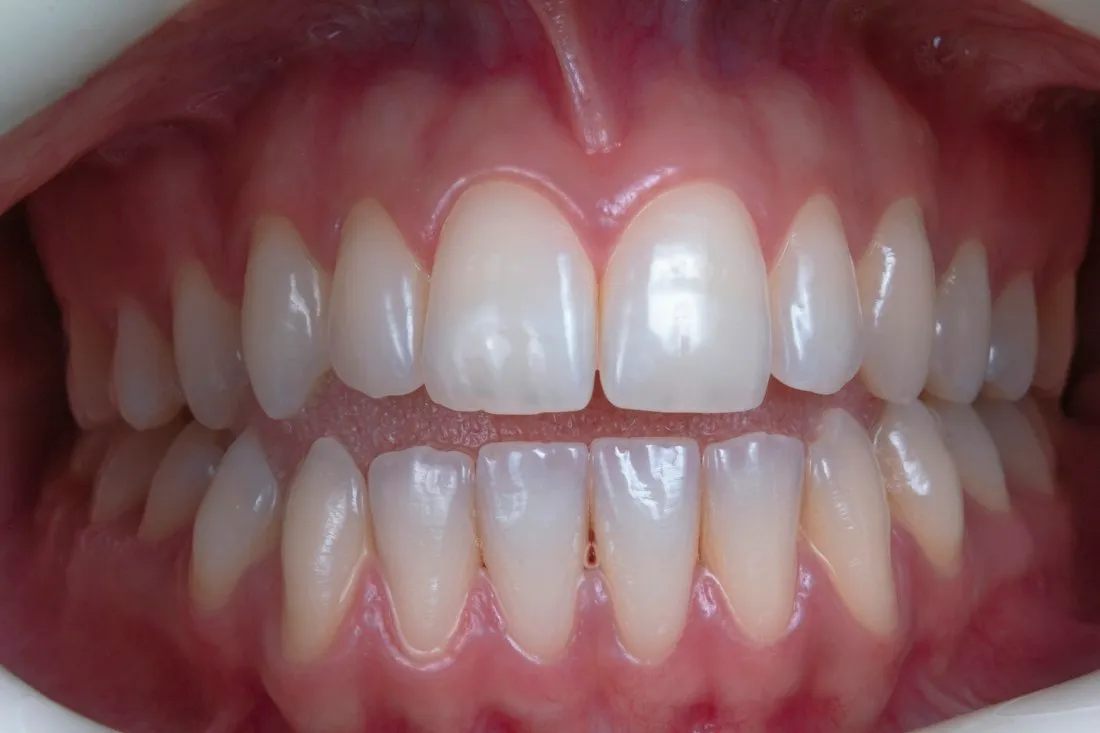
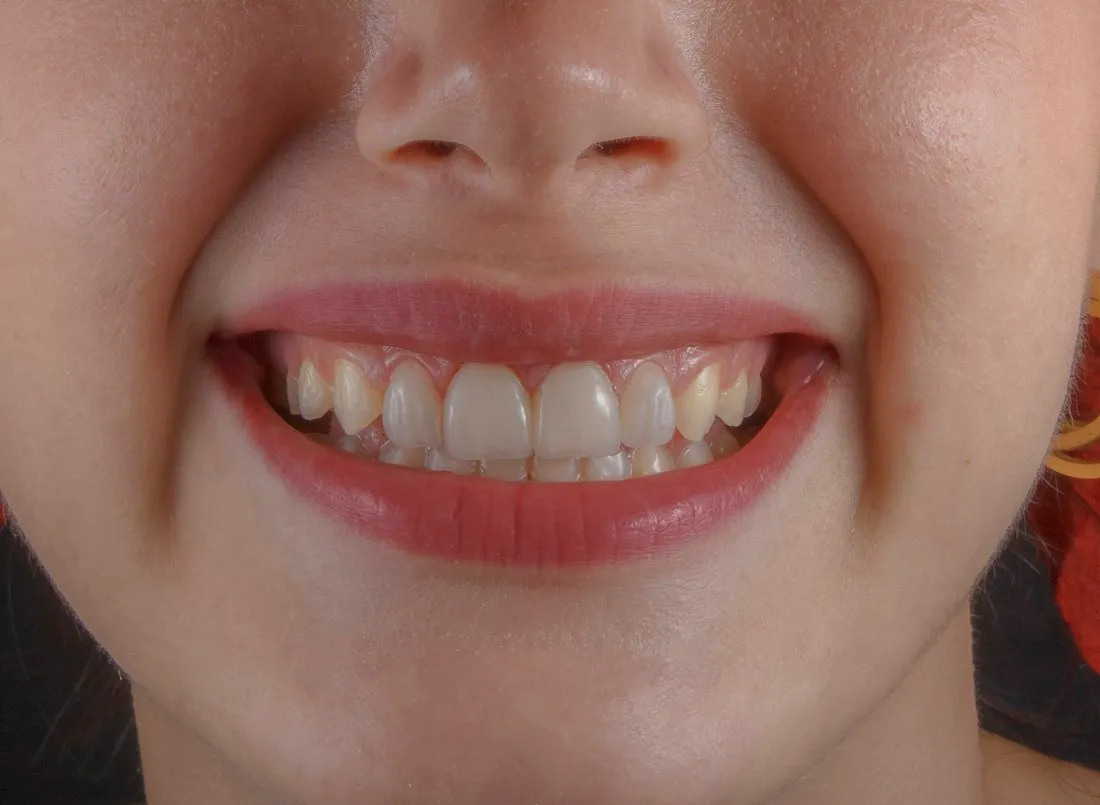
A tooth is not one solid white block. Enamel, the outer layer, is semi-translucent and close to colourless. Most of what you see is the dentine underneath, which is naturally ivory to yellow-brown, showing through. Enamel thins slowly across a lifetime through chewing, acid exposure and brushing, so more dentine shows through with every decade. That is why teeth darken with age even in people whose oral hygiene never slips.
Extrinsic stain sits on the surface
Within minutes of a clean, saliva lays down a thin protein film called the pellicle. Chromogens from coffee, tea, red wine, dark spices, tobacco and chlorhexidine mouthwash bind to it. This layer is superficial, it responds to physical removal, and it is the only thing a polish or an abrasive toothpaste can address.
Intrinsic stain is inside the tooth
Age-related dentine change, tetracycline exposure while teeth were forming, fluorosis and the grey cast of a tooth whose nerve died after trauma all sit within the tooth structure itself. No amount of scrubbing reaches them. Changing that colour requires a chemical that can diffuse through enamel, and in practice there is only one family of those.
How peroxide lightens a tooth
Hydrogen peroxide is a small, unstable molecule that passes through enamel and dentine far more readily than its size suggests. Once inside, it breaks down into reactive oxygen species that attack the long, double-bonded pigment molecules trapped in the tooth. Split those chains into shorter fragments and they stop absorbing visible light in the same way. The pigment is not scraped out or covered over. It is chemically taken apart.
Carbamide peroxide, the ingredient in most overnight gels, is simply a slower delivery system. It decomposes into hydrogen peroxide and urea at roughly a three-to-one ratio, so a 10% carbamide gel is broadly equivalent to about 3.5% hydrogen peroxide, released gradually over several hours instead of all at once.
Every product that genuinely changes the colour of the tooth itself contains peroxide. If the ingredients panel has none, you are holding a cleaning product with a marketing budget.
This single mechanism explains the entire market. Blue LED mouthpieces, activating lights, coconut oil pulling and lemon-and-baking-soda pastes are either riding on the peroxide in the same kit or doing nothing to intrinsic shade at all. Reviews of activating lights, including pooled analyses catalogued in the Cochrane Library, have not found a convincing added benefit over the same gel used without a light.
Concentration and contact time
Whitening is a dose, and dose is concentration multiplied by contact time. A high concentration for one hour in a dental chair and a low concentration worn overnight for two weeks can finish in almost the same place. That is the most useful thing to understand before you compare prices, because it means a stronger gel is buying speed rather than a better end result.
Concentration also drives the side effects. Higher peroxide reaches the pulp faster and produces more sensitivity, and it is more aggressive towards gum tissue if it leaks past an ill-fitting tray. Regulation reflects that. In the UK and across the EU, products releasing more than 0.1% hydrogen peroxide may only be supplied through a dentist, with a ceiling of 6%, which is precisely why European high-street whitening kits do so little. In the United States, over-the-counter strips are sold at higher concentrations under a different regulatory route, and the U.S. Food and Drug Administration treats most of them as cosmetics rather than drugs.
How GlaadBlog.org weighs the four whitening routes
The four options below are not four products. They are four combinations of dose, supervision and cost. We have deliberately given cost as a band rather than a figure, because quoted prices for the same in-chair system vary several-fold between cities and neither we nor anyone else can tell you what your local rate is.
| Route | Cost band | Typical shade change | Time to result | Sensitivity risk | Supervision |
|---|---|---|---|---|---|
| In-chair | Highest | 2 to 6 shades, some rebound | One 60 to 90 minute visit | High, usually short-lived | Full, with gum barrier placed |
| Dentist-supplied trays | Mid to high | 2 to 6 shades, best durability | 1 to 3 weeks of nightly wear | Moderate, and adjustable | Exam, custom trays, review |
| Over-the-counter strips | Low | 1 to 3 shades, patchy at the edges | 10 to 14 days | Moderate, no way to adjust dose | None |
| Whitening toothpaste | Lowest | Surface stain only, no shade change | Ongoing | Low, but abrasion risk | None |
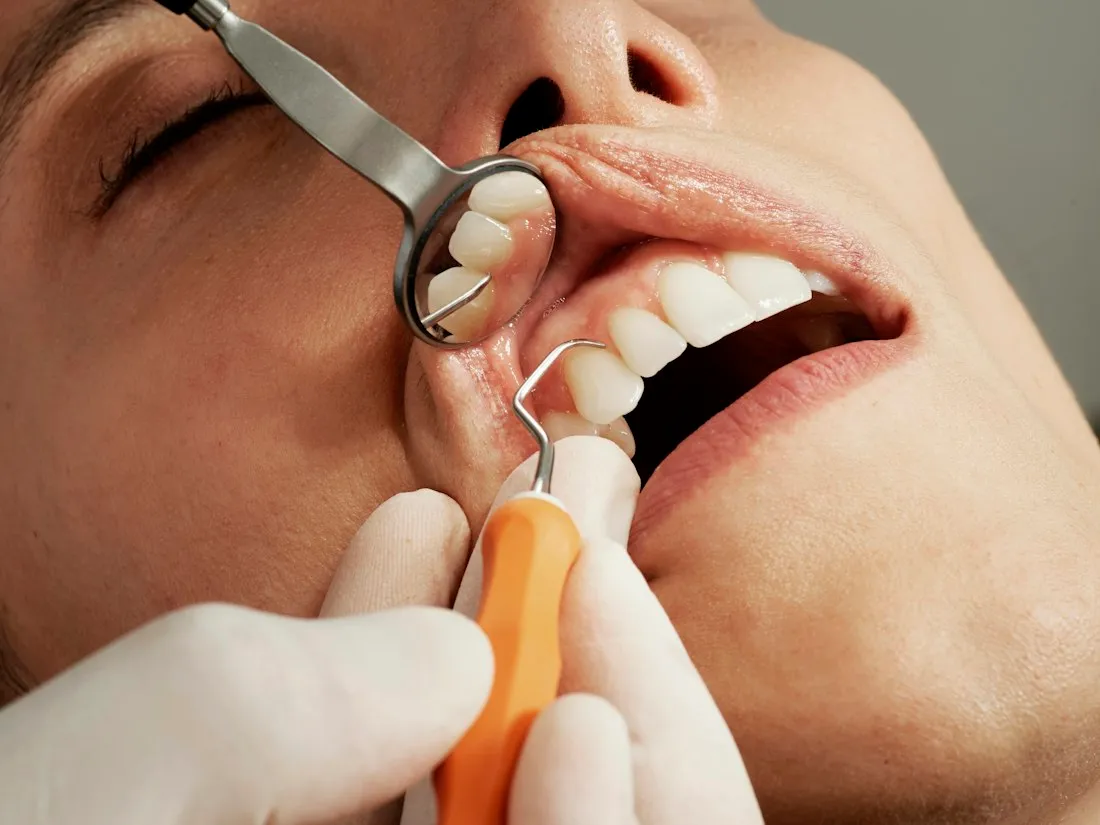
The gap that matters in that table is not price, it is fit. A custom tray holds a thin film of gel against the tooth and keeps it off the gum. A one-size strip cannot follow a crowded arch, so it under-treats rotated teeth and leaves the last molars untouched. If your front teeth are reasonably aligned, strips are a fair-value experiment. If they are not, you are paying for an uneven result.
Getting more out of whatever route you choose
- Have a check-up and a scale first. Whitening a tooth with untreated decay or a leaking filling drives peroxide straight into the dentine underneath, and stain lifts unevenly over plaque.
- Start two weeks of a potassium nitrate or stannous fluoride toothpaste before you begin, not after the sensitivity arrives.
- Use a thin ribbon of gel, not a full tray. Excess only reaches the gum.
- Avoid deeply coloured food and drink for 24 to 48 hours after each application, while the enamel is temporarily more permeable.
- Stop for two or three nights at the first sign of a persistent ache rather than pushing through. Progress made so far does not reverse.
Whitening toothpaste, charcoal and the abrasion problem
Whitening toothpastes work by abrasion, by a small amount of a stain-lifting surfactant, or occasionally by adding a blue pigment that makes teeth look less yellow while it sits on them. All three act on the outside of the tooth. None of them change the dentine colour, so the shade you were born with is the shade you keep. For someone whose only problem is coffee film, that is genuinely enough. For someone asking why their teeth look darker than they did at 25, it is not.
Charcoal pastes are the clearest example of the trade-off. They remove surface stain because they are gritty, and many sit at the high end of relative dentine abrasivity. Used daily on exposed root surfaces or over composite fillings, that grit wears dentine and dulls restoration margins, and much of the wear is permanent. Several charcoal products also omit fluoride entirely, which swaps a proven caries benefit for a cosmetic one. The American Dental Association has repeatedly pointed out that there is no evidence charcoal dentifrices are safe or effective, and the products carrying its Seal of Acceptance do not include them.
Sensitivity, and how to manage it
Sensitivity is the most common side effect of whitening by a wide margin. Reported rates vary between studies, but it is reasonable to expect that somewhere between a third and two-thirds of people notice something, from mild cold sensitivity to the sharp, brief zings often described as zingers. It is caused by peroxide reaching the pulp and provoking a transient inflammatory response, not by damage to enamel, and it almost always settles within 24 to 48 hours of stopping.
The practical levers are shorter wear time, alternate nights instead of consecutive ones, a lower concentration gel, and desensitising agents. If sensitivity was already a problem before you started, work through our guide to finding the cause of tooth sensitivity first, because whitening on top of exposed root dentine or a cracked cusp is an unpleasant way to discover the underlying issue.
Crowns, veneers and white fillings do not change shade
Peroxide only acts on pigment held inside natural tooth structure. Porcelain, composite, glass ionomer and metal are unaffected. A crown on an upper front tooth that matched perfectly last year will look conspicuously dark once the teeth beside it lighten by three shades, and no amount of additional gel will fix it.
That dictates the order of work. Whiten first, then wait. Residual oxygen in the tooth measurably reduces the bond strength of adhesive restorations, so most clinicians leave around two weeks between finishing a whitening course and bonding anything new. Only then is the shade stable enough to match. Getting this sequence backwards is one of the more expensive mistakes in cosmetic dentistry, because the fix is replacing restorations you have just paid for.
Who should not whiten, and for how long it lasts
Whitening is elective, which means there is never a reason to push it through an unfavourable situation. Untreated decay, a leaking filling, a cracked tooth or active gum disease should all be dealt with first. Bleeding, inflamed gums are both a sign that something needs attention and a route for gel to reach tissue it should not touch, which is covered in our guide to the early signs of gum disease.
Under-18s are generally not treated cosmetically because the pulp chamber is larger and closer to the surface. In pregnancy, there is no evidence of harm from the low doses involved, but because there is also very little evidence either way, most dentists and professional bodies suggest deferring an entirely optional procedure. A single dark tooth following root canal treatment is a different problem with a different solution, internal bleaching from inside the tooth, and no tray system will match it.
On longevity, the honest answer is one to three years before most people want a top-up, with heavy coffee drinkers and smokers at the short end. Keeping the custom trays makes maintenance nearly free. What holds a result far more reliably than any product is the dull work described in our daily oral care routine, plus the professional clean that removes the film no brush reaches. Every claim on this page was checked against the same sources we list below, under the process set out in the GlaadBlog.org editorial policy.